
When I ask students where and how they practice at home, What they tell me says a lot about the quality of their practice time.
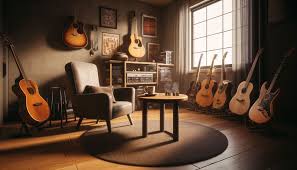
The ones who can honestly say they practice every day? They almost always have a good setup. Their guitar is out on a stand, and everything they need is within reach.
Everyone else has the best intentions. But days are easier to skip when something as simple as the guitar being in its case stands in the way.
I recommend changes, but not everyone takes the advice, and not everyone can.
I see the same thing with people who have been teaching themselves before they come to me. Take the person who “practices an hour a day” but hasn’t gotten much better. Usually they’re practicing in front of the TV, or somewhere they get interrupted every ten minutes. Or their guitar is in the corner and they have to hunt for their tuner every time.
Your practice space matters. Not because you need some Instagram-worthy setup.
Because disorganization and distraction kill progress.
Here’s what matters.
Why Most People's Practice Spaces Don't Work
When I ask people where they practice, I hear some version of these over and over.
One person keeps the guitar in its case in a corner, the tuner in a drawer, and the music somewhere else. The capo could be anywhere. By the time they’ve gathered everything, they’ve lost 10 minutes and half their motivation.
Another practices at the kitchen table with bad lighting, an uncomfortable chair, and people walking through.
Kids run into this too. The kid making steady progress? Has a dedicated spot where everything they need is within reach. The kid practicing in the family room while siblings watch TV, parents cook dinner, and the dog runs through will have a hard time focusing. That usually isn’t a focus problem. It’s a room problem.
Most people never think about where they practice. They just play wherever the guitar happens to be.
What My Practice Space Looks Like
I practice in my home office. My guitar sits on a stand right next to me.
I play guitar for a living, and the case gets me too. If my guitar is in its case, I practice less. If it does that to me, it will do it to you.
I use a Snark tuner. For a metronome, I use the Pro Metronome app on my phone. I put the phone on silent first, so a text or an email alert doesn’t pull me out of what I’m working on.
I have a small practice amp next to the guitar, but I often practice unplugged.
I sit in an office chair with arms that move out of the way so they don’t block the guitar. I also use a footrest. I always use a strap, even sitting down. It keeps the guitar in the best position every time, and that lets me play longer.
I have so much material that I keep it in multiple binders. Most people only need one, organized like this:
- Reference sheets for rhythm, chords, scales, arpeggios, and techniques
- Review: songs and solos you can play
- What you’re working on now
That last section is the one you play every day until it seems easy. Then it moves to the review section of the binder.
When everything is in one place and in the same order, you sit down and start. You don’t spend the first ten minutes looking for the right sheet.
What a Good Practice Space Needs
The ideal setup is a dedicated room with a door you can close, good lighting, a comfortable temperature, and your guitar on a stand where you can see it.
Most people don’t have the space for that, and that’s fine. Here’s what you need to make your practice more efficient:
A spot where your guitar lives. On a stand or wall hanger, visible, and easy to grab.
Everything within reach. Tuner, picks, capo, music stand (my material goes on my desk; a stand would be better, but it would make the space I have too cluttered), binder, and anything else you use regularly. If you have to hunt for things every time, you’ll practice less.
A good playing position. Any comfortable chair with no arms will work. Use a strap so the guitar sits in the same place every time. A footrest helps too.
Minimal distractions. Turn the TV off. If your phone is your metronome, put it on silent. If it isn’t, put it in another room. Tell your family, “I’m practicing for 30 minutes. Please don’t interrupt unless it’s urgent.”
Decent lighting. I’ve seen people practice in dim corners without realizing why practice feels so unpleasant. It’s the eye strain. Everything feels harder than it needs to be.
That’s it. You don’t need a recording studio. You need a space that doesn’t fight you.
The Portable Setup (For People Without Dedicated Space)
If you can’t leave everything set up, get a box or crate.
Put everything you need in it: tuner, picks, capo, strap, your binder, a pencil and paper, and your metronome if you don’t use a phone app.
Over time, I’ve bought multiple capos, tuners, straps, and picks. Some live in my practice space. The others live in my guitar case, so when I have a gig, everything is in there and ready to go. Packing for a gig doesn’t take anything from my practice space.
When it’s practice time, grab the box, set up, and practice. Then put it away.
This takes 2 minutes instead of 10 minutes of hunting, and that difference matters.
What You Need
There are a ton of options for everything, from basic to very fancy. Here’s how I’d sort them.
Essential:
- A tuner. A clip-on works fine.
- A music stand, or somewhere stable to put your music.
- A metronome. Timing matters more than most people think, and an app works fine.
- Picks and a capo.
- A strap.
Useful:
- A binder for your music.
- A recording device. Your phone works. Record yourself now and then to hear what needs work.
- Extra strings, so you’re not stuck when one breaks.
- A footrest.
- A small practice amp, if you play electric.
Nice but not essential:
- A drum machine, or links to backing tracks. These make practice more fun, but they’re not essential.
- A specialty guitar chair like the Pick and Glide, which runs about $350. I’ve never used one, and you don’t need anything that deluxe. Comfort is important. Luxury is optional.
- Elaborate organization systems with multiple folders or binders. Honestly, these often make your practice time less efficient. If you have a ton of material, keep one binder for what you’re working on now and another for the material you want to review. Those are the two you use every day. Keep a third for things you may get to one day or no longer want to play. You may change your mind, and you don’t want to have to buy it or transcribe it again.
Most people overthink this. Start with the essentials, then add more only if you’ll use it.
The One Thing That Matters Most
The best practice space is the one you’ll use.
A perfectly organized room that you avoid because it feels isolated won’t help you. A corner of your bedroom with a stand, a chair, and minimal distractions is enough.
Don’t let “perfect” stop you from “good enough to practice.”
Fix Your Space
If you’re not making the progress you want, take an honest look at where you practice:
- Can you get to your guitar easily, or is it in its case in a corner?
- Do you have to hunt for your tuner, picks, and capo every time?
- Are you practicing with the TV on, or in the middle of household chaos?
- Is your lighting bad or your chair uncomfortable?
- Does the guitar sit in the same spot every time, or are you fighting to hold it in place?
These things seem minor until you realize they cost you 10 to 15 minutes of every practice session, plus constant breaks in your focus.
Sometimes it’s not about discipline. It’s about environment. Set up your space so practice is easy to start and hard to interrupt.

About The Author
Brian Fish is a professional guitarist who has been dedicated to helping other guitar players in Northeast Ohio pursue their musical dreams since 1994. He’s passionate about guiding others on their musical journey! He is the Guitar Playing Transformation Specialist, instructor, mentor, trainer, and coach at
Guitar Lessons Geauga.
Brian has also assisted people from around the globe in developing a solid sense of timing and enhancing their creativity through the fantastic rhythm course, “Ultimate Rhythm Mastery,” available at MusicTheoryForGuitar.com.
If you live in Geauga County / North East Ohio, Guitar Lessons Geauga can help you become the player you’ve always wanted to be.