
You’ve learned the songs. You’ve rehearsed with the band. You feel ready.
But playing a gig isn’t the same as playing in your practice room. Things happen on stage that you can’t predict, can’t control, and can’t pause for. How well you’ve prepared for those moments is what separates a solid performance from a rough night.
Here’s what actually matters when you’re getting ready to play live.
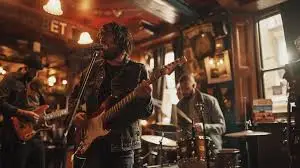
Know Your Material Cold — Because Distractions Are Coming
Knowing your songs and being able to perform them under pressure are two different things.
I’ve had people walk up to me mid-song — while I was singing — to tell me it’s their friend’s birthday. Could they not wait until between songs? Apparently not. But the music can’t stop because someone wants to make a request. You have to acknowledge them, keep playing, keep singing, and not lose your place.
That only works if you know your material inside and out. If you’re relying on reading every note and every word, a distraction like that throws you completely off. And distractions will come — someone bumps into your mic stand, a drink gets knocked over near the stage, the bartender waves at you to turn down, a phone rings at the table right in front of you.
When you’re practicing for a gig, play through the entire set without stopping. Don’t restart songs when you make a mistake. Learn to recover and keep moving, because that’s what you’ll have to do live. If you stumble on a lyric, ad lib something. If you miss a chord change, catch the next one. The audience almost never notices a mistake unless you stop and make a face about it.
Engage the Crowd — You Can't Do That Reading Music
If your face is buried in a music stand the entire night, you’re not performing.
To read the room — to see whether people are into it, whether the energy needs to shift, whether someone’s trying to get your attention — you have to actually look at the audience. That means knowing your material well enough that you’re not dependent on charts for every song.
That said, lyric cheat sheets are completely fine. Even the pros use big monitors with lyrics on stage now — partly because everyone watches concerts through their phones these days, and nobody wants a simple mistake becoming the highlight of someone’s video. Local bands do it too, and there’s no shame in it. A quick glance at a lyric sheet to confirm a second verse is very different from reading the entire song off a page with your head down.
The goal is to be present with the audience. Make eye contact. React to what’s happening in the room. That connection is a huge part of what makes a live show feel like a live show instead of a rehearsal that happens to have people watching.
Read the Crowd and Adjust
A set list is a plan, not a contract.
If the crowd skews older, you might need to add an extra slow song or two. They’re not going to be up dancing all night, and trying to force high energy for three hours when the room isn’t matching it just makes everyone uncomfortable.
If the crowd is younger, keep the energy up — until you start seeing the dancers leave the floor one by one. That’s your signal. Drop in the slow song. And here’s what happens: even the guys who refused to dance all night get begrudgingly pulled onto the floor, because everyone can at least slow dance, and you want to make your girl happy.
Reading the room is one of the most important skills a gigging musician can develop. It’s closely related to the communication and adaptability skills that make you the player everyone wants to play with — you’re just applying them to the audience instead of the band.
Own the Stage
Stage presence isn’t just about how you play. It’s about how you use the space.
Don’t bunch up like a team of kids playing youth soccer. Spread out. Use the whole stage. If you move around during the set, make sure you and your bandmates are always plugging the holes at the front of the stage so no one in the audience feels ignored. The people on the far left shouldn’t be staring at an empty corner all night.
Step back when someone else is soloing — give them the spotlight. Step toward the front when it’s your turn. These seem like small things, but they add up. The difference between a band that looks like they belong on stage and one that looks like they’re standing in a garage is often just awareness of spacing and movement.
Rehearse for Real Conditions
Your practice room and the stage are not the same environment. The closer you can get to real conditions before the gig, the fewer surprises you’ll face.
Rehearse at gig volume. If you’ve only ever played at bedroom volume, the first time everything is loud can be disorienting. Practice with the band at performance levels so you’re used to hearing yourself in that mix.
Practice in your stage clothes. If you’re wearing something different than your usual practice attire, make sure it doesn’t interfere with your playing. A jacket that restricts your arm movement or a strap that slides on a certain shirt — you want to find that out at rehearsal, not on stage.
Practice in bad lighting. Some stages have terrible lighting. Sometimes you can barely see your fretboard. Other times a spotlight hits you right in the eyes just as you go to solo — it’s nice that they put the spotlight on you, but now you can’t see anything. If you’ve only ever practiced in a well-lit room, that first dark stage or blinding light is going to throw you off. Practice in dim conditions so your hands know where to go without your eyes needing to confirm it.
Prepare Your Gear
Equipment fails at the worst possible time. The best thing you can do is bring backups of everything you reasonably can.
Extra picks, extra strings, extra cables, extra batteries. A backup strap. If you can bring a second guitar, do it — a broken string mid-set with no backup means you’re standing on stage doing nothing while the band plays without you.
When something does go wrong — and it will — check the simple stuff first. Is the cable plugged in all the way? Is the amp on standby? Did you step on your tuner pedal without realizing it? Most “equipment failures” are something basic that takes ten seconds to fix if you stay calm and troubleshoot instead of panicking.
Soundcheck
Whenever you have the opportunity to soundcheck, take it. This is your chance to make sure the mix is right, your monitor levels let you hear yourself, and all your gear is working.
Use the soundcheck to play at full performance volume. Don’t hold back — the sound person needs to hear what you’ll actually sound like during the show, not a quiet version of it.
If you don’t get a soundcheck, build in a few extra minutes before the gig to check your setup and make sure everything is connected and functioning. The first song shouldn’t be the moment you discover a problem.
Warm Up
Warm up before you play. Scales, arpeggios, the intros and endings of your set, whatever challenging sections need your fingers loose and ready. You don’t want the first song to be your warm-up — the audience is hearing that too.
If you’re short on time, don’t start the set with the hardest material. Give yourself a couple of songs to ease in before the demanding stuff hits.
A Note for Solo Performers
If you’re playing solo acoustic gigs — coffee shops, restaurants, private events — most of this still applies. You still need to know your material cold, engage the audience, read the room, and prepare your gear.
But some things hit differently when you’re on your own. There’s no band to cover for you if something goes wrong. If you break a string, the music stops. If you lose your place, there’s no rhythm section holding things together while you find it. Everything is on you — the playing, the singing, the crowd interaction, the set list decisions, and often running your own sound.
The upside is that you have total flexibility. You don’t need hand signals or eye contact to change the set list — you just do it. You can stretch a song if the room is feeling it or cut one short if it’s not landing. You can talk to the audience between songs and adjust the whole direction of the night based on what you’re seeing.
The challenge is that you have to keep the energy going for the entire set by yourself. No drummer to drive the beat, no bass player to fill out the sound. Your rhythm, dynamics, and variation have to be strong enough to hold an audience on their own. That’s a different kind of preparation, and it’s worth rehearsing full sets at home to build that stamina.
The Little Things Add Up
None of these things by themselves make or break a gig. But together they’re the difference between a band that looks and sounds like they’ve done this before and one that’s clearly figuring it out on stage.
Know your material cold. Engage the audience. Read the room. Use the stage. Prepare for the unexpected. Handle problems without the audience knowing.
That’s how you deliver a show people remember — and how you get asked back.

About The Author
Brian Fish is a professional guitarist who has been dedicated to helping other guitar players in Northeast Ohio pursue their musical dreams since 1994. He’s passionate about guiding others on their musical journey! He is the Guitar Playing Transformation Specialist, instructor, mentor, trainer, and coach at
Guitar Lessons Geauga.
Brian has also assisted people from around the globe in developing a solid sense of timing and enhancing their creativity through the fantastic rhythm course, “Ultimate Rhythm Mastery,” available at MusicTheoryForGuitar.com.
If you live in Geauga County / North East Ohio, Guitar Lessons Geauga can help you become the player you’ve always wanted to be.