Nathan will turn 13 in a few months.
He’s been taking lessons with me for two years. He knows his chords. He can read lead sheets. His rhythm is solid. He understands how to use a capo and come up with his own parts.
He’s more than ready to play on the worship team at his church.
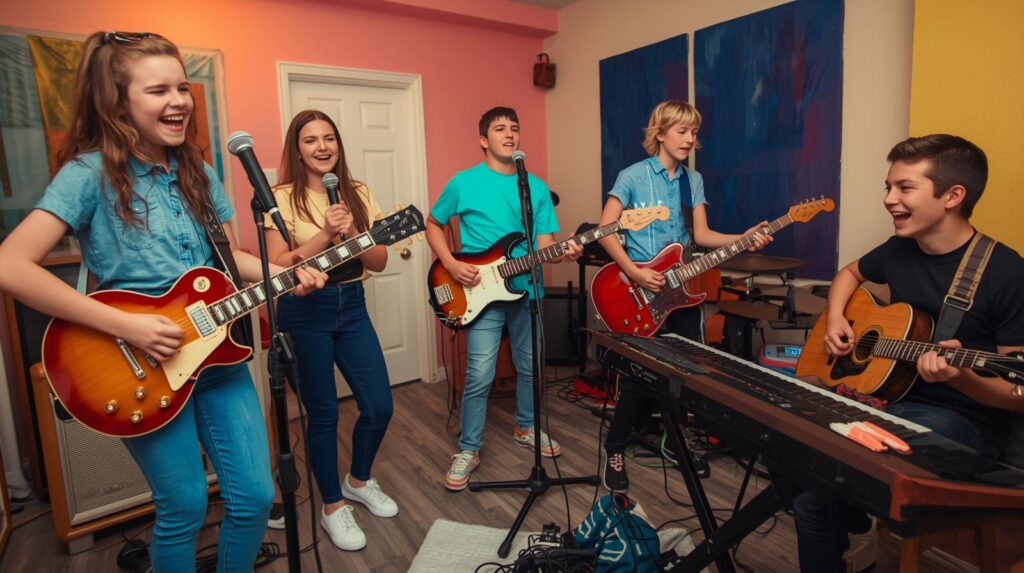
But the church leadership is hesitant. Not because Nathan isn’t good enough – he is. But because he looks young. They’re worried about putting someone who looks 12 on stage.
Nathan’s parents think it’s a good idea. I’ve been encouraging him – gently, never forcing – because I know he can handle it.
And I know this because I’ve watched this same pattern dozens of times over 30 years.
The Pattern Most Parents Don't See
Here’s what typically happens when a kid starts with me at age 10-13:
Within 1-2 years, they’re ready to start playing at their church.
By age 14-15, they’re contributing regularly to worship teams.
Jake and Nate both started at 10. Within two years, both were ready to play at church.
Loel, Tim W, Tim G, and another Nate – all started around 10-13. All playing at church by their mid-teens.
Zach started at 13. He helped form a youth worship band at his church. Then started leading worship at various churches. Now – in his twenties – he gets paid to run sound at a big church in the area.
That progression started when he was 13 and built systematically from there.
Josh started at 12. Same trajectory.
This isn’t about exceptional natural talent. This is about systematic skill development starting at the right age with the right approach.
What Bands Actually Need
(It's Easier Than You Think)
Here’s what most parents don’t realize: Playing in a church worship band isn’t as technically difficult as it seems.
Here’s what you actually need:
- Solid chord knowledge
- Ability to read lead sheets (critical because songs change frequently)
- Good rhythm and timing
- Know how to use a capo
- Ability to create your own parts
That’s it. That’s the skill set.
Why is it easier than people think? Because when you know how to analyze music, you realize there’s a lot of repetition. Most worship songs follow predictable patterns. The focus is on the words and the worship experience, not technical musicianship.
Good, reliable musicians who show up prepared and contribute to the worship experience? Churches are usually ecstatic when they find them.
That’s why Nathan is ready at 13. That’s why all my other students were playing by 14-15. Not because they’re prodigies – because they built the actual skills churches need.
Why This Matters for Your Child
When parents bring their 10 or 11-year-old to me, they’re usually thinking: “I want my kid to learn an instrument. It’ll be good for them.”
They’re not thinking: “My child could be contributing meaningfully to their church community or forming a band with friends within two years.”
But that’s exactly what happens.
Your 13-year-old isn’t just learning songs in their bedroom. They’re developing skills that let them serve their community, perform in front of people, and gain confidence through real-world application.
Zach’s progression shows where this can lead: Youth worship band at 13 → Leading worship at multiple churches → Getting paid to run sound at a major church. All starting in his early teens and building from there.
That’s not “maybe someday when they’re older.” That’s what happens for students who start with proper instruction at the right age.
What Makes This Possible
(And Why Most Guitar Teachers
Can't Deliver It)
Here’s why my students are ready to play at churches by 14-15 while other kids are still fumbling through YouTube tutorials:
They learn to read lead sheets. This is critical for church work because songs change constantly. Most guitar teachers don’t teach this systematically.
They understand how to create parts. Not just copy what they hear, but analyze the song structure and create appropriate parts for their skill level.
They build real competency through my layering approach. Start with simplified versions that sound good with the band, add complexity as they’re ready. By the time they’re playing full arrangements, they’ve built confidence through incremental success.
They develop reliability. Church teams need people who show up prepared, play their parts consistently, and contribute to the collective sound. My group environment teaches this from day one.
YouTube can’t teach any of this. Private lessons that let students pick random songs can’t teach this. Generic method books can’t teach this.
This requires systematic skill development designed to produce students who can actually function in real musical situations.
The Window You're Missing
Here’s what keeps me up at night:
Parents wait. They think “we’ll start lessons when they’re older” or “we’ll see how they do on their own first.”
Meanwhile, the window where their child could be developing these skills when they have the most time is closing.
Nathan started at 11. By 13, he’s ready to play at church. If his parents had waited until he was 13 to start, he’d be 15 before he was ready – three years of potential contribution and confidence-building lost.
The students who start at 10-13 and build proper competency are ready to play meaningful gigs by their mid-teens. The students who start later or learn from YouTube? They’re still trying to figure out basic chord progressions at 17.
What This Actually Looks Like
I’m not talking about your kid becoming a rock star. I’m talking about something much more achievable and arguably more valuable:
Your 15-year-old stands on stage Sunday morning, plays rhythm guitar for the worship team, contributes to their church community, gains confidence through performance experience, and develops skills that will serve them for life.
That’s not fantasy. That’s what happens when students build real competency through systematic instruction starting at the right age.
Jake and Nate did it. Zach did it. Josh did it. Loel and the two Tims did it.
Nathan is about to do it – as soon as his church realizes that “looking young” has nothing to do with whether someone can contribute meaningfully.
The Question You Should Be Asking
Don’t ask: “Should my child take guitar lessons?”
Ask: “What could my child be doing in 2-3 years if they start building real skills now?”
The answer: Contributing to their church community or playing in a band with friends. Performing in front of people. Developing confidence. Building skills that last a lifetime.
Or they could be 15 and still trying to learn songs from YouTube.
Your choice.
If Your Child Is Ready to Start
They’re in the window where systematic skill development creates rapid, meaningful progress.
Not “maybe they’ll play someday” progress. Real, achievable outcomes within 1-2 years. And when they stay all the way through high school, it is amazing what they can accomplish.
Church worship teams. School performances. Bands with friends. Real-world application of skills they’re building right now.
But only if they start with proper instruction. Only if they build actual competency instead of scattered YouTube knowledge. Only if they learn the skills that churches actually need – like lead sheet reading, part creation, and reliable performance.
About The Author
Brian Fish is a professional guitarist who has been dedicated to helping other guitar players in Northeast Ohio pursue their musical dreams since 1994. He’s passionate about guiding others on their musical journey! He is the Guitar Playing Transformation Specialist, instructor, mentor, trainer, and coach at
Guitar Lessons Geauga.
Brian has also assisted people from around the globe in developing a solid sense of timing and enhancing their creativity through the fantastic rhythm course, “Ultimate Rhythm Mastery,” available at MusicTheoryForGuitar.com.
If you live in Geauga County / North East Ohio, Guitar Lessons Geauga can help you become the player you’ve always wanted to be.