A mom brought her 11-year-old son to me last year. He’d been trying to learn guitar from YouTube for six months. Smart kid. Motivated. Practicing an hour every day.
And making zero progress.
His mom was frustrated. “He loves music. He really wants to learn. But he keeps saying ‘this is too hard’ and I don’t know how to help him.”
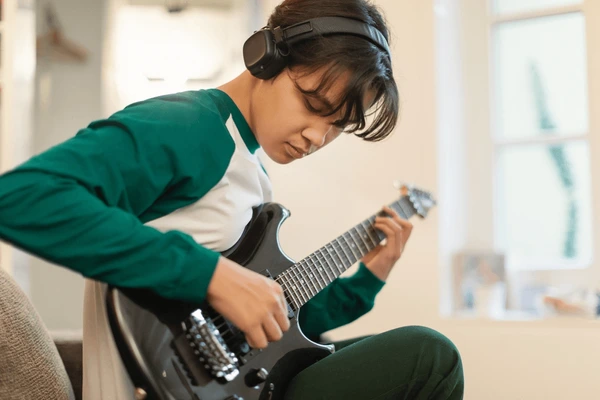
I watched him play for about a minute.
Then I knew exactly what the problem was.
The YouTube "Beginner" Trap
Every video he’d been learning from was labeled “beginner.” Easy guitar songs for beginners. Simple chords for beginners. Beginner strumming patterns.
But they weren’t beginner level at all.
The chords they were teaching? Hard for most adults when they’re first starting. The strumming patterns? Requiring coordination that takes weeks to develop. The “easy songs”? Built on techniques he hadn’t learned yet.
Here’s what happens: Someone creates a YouTube channel. They need views. A video titled “Play Hotel California – Beginner Lesson!” gets clicked. A video titled “Foundational Chord Transitions” doesn’t.
So they skip the actual beginner fundamentals – the unglamorous, essential building blocks – and jump straight to content that looks impressive but requires skills the student doesn’t have yet.
The kid practices hard. Gets frustrated. Starts to believe “I’m just not musical.”
What 30 Years of Teaching Has Taught Me
I can watch a student play for a minute and see exactly what they need to work on. Not because I’m particularly brilliant – most problems are easy to spot once you’ve been doing this for a while and you actually care about getting people results.
The key phrase there: and you actually care about getting people results.
YouTube creators care about views. Online lesson platforms care about subscriptions. They’re optimizing for engagement, not skill development.
I’m optimizing for whether your child can actually play guitar six months from now.
The Layering System They Don't Understand
Real skill development isn’t about doing separate exercises until you’re “ready” for real songs. It’s about stripping down actual songs to a level the student can handle right now, then building them back up one layer at a time.
Here’s what I mean:
That 11-year-old who’d been stuck for six months? I took the songs he wanted to learn and simplified them down to their core. Not “baby versions” – the actual musical foundation, just played more simply.
When he played his part by itself, it didn’t sound impressive. But when he played along with the song? He sounded like he was part of the band.
That’s the difference. He was playing REAL music from day one, just at his actual skill level. Not stuck doing finger exercises in isolation. Not jumping to parts he couldn’t handle yet.
Over time, we layered complexity back in. More sophisticated strumming. Additional chord voicings. Eventually, the full arrangement that the YouTube “beginner” lesson tried to teach him on day one.
But now he could actually play it. Because we built the foundation systematically.
Within three weeks, he was progressing faster than he had in six months on his own.
Why Online Content Can't Do This
YouTube can’t adjust to your child’s actual level. It gives you one version of a song – usually too hard – and hopes you figure it out.
I can watch your child play, see exactly what layer they’re ready for, and adjust in real-time.
When I see a student struggling with a strumming pattern, I don’t tell them to “practice more.” I strip it down to a simpler pattern they CAN do right now, let them experience success with the song, then gradually add complexity.
When a chord transition is too difficult, I don’t make them drill it in isolation until their fingers bleed. I simplify the transition, keep them playing music, and build back to the full version systematically.
That’s the difference between content designed for clicks and instruction designed for results.
Why This Matters for Your Child's Development
When kids work at the wrong level – too hard, skipping fundamentals – they don’t just fail to learn guitar. They learn something worse: They learn that effort doesn’t lead to results.
They practice hard and see no progress. They start to believe “I’m not good at this.” That belief transfers to other areas. School. Sports. Anything challenging.
But when a child works at the RIGHT level – where effort actually produces visible progress – they learn the opposite lesson: “If I work at something systematically, I get better.”
They play along with a song and hear themselves sounding like part of a band. Even if their part is simplified, it WORKS. That experience of “I can do this” builds confidence that extends far beyond guitar.
That’s the cognitive skill that transfers to academics. Not the guitar playing itself, but the experience of systematic improvement. The understanding that complex skills can be broken down, mastered in layers, and rebuilt into something impressive.
What Online Learning Can't Provide
Here’s what no YouTube video or online lesson platform can do:
Diagnosis. I can see within a minute what’s holding a student back. Online content has no idea where your child actually is.
Adjustment. When I see a problem, I adjust the approach in real-time – stripping down to a simpler layer or adding complexity when they’re ready. Online content keeps marching forward whether your child is ready or not.
Proper layering. I know how to take any song and simplify it to a level that works for your child right now, then build it back up systematically. Online content gives you one version and hopes it matches your skill level.
Accountability. In my class environment, students can’t fake understanding or skip the hard parts. When everyone’s playing together, you can hear immediately who’s got it and who needs more work on a simpler layer. Online learning? Kids can pause, rewind, give up, and no one knows.
The Real Cost of "Free" Lessons
YouTube lessons are free. Online subscriptions are cheap. But here’s what they cost:
Months or years of frustration working above your actual level. Bad habits from trying to copy techniques you’re not ready for. And worst of all – a child who starts to believe they “aren’t musical” when the truth is they just needed someone who could meet them where they actually are.
I’ve had parents tell me: “We wasted a year on YouTube before we found you. I wish we’d started here.”
I’ve also had parents bring me kids who tried learning from an app at age 8, got frustrated, quit – and came back at age 11 thinking they’d already failed at guitar. When the truth was they just started too early with an approach that couldn’t adjust to their level.
If Your Child Is Struggling
With Online Learning
If your child has been trying to learn from YouTube or online lessons and seems stuck, frustrated, or starting to believe they “can’t do it” – it’s probably not them.
It’s probably that they’re working above their actual level without anyone to diagnose the problem and strip things down to where they can actually succeed.
In my classes, I can see exactly where they are, meet them at that level, and build systematically.
Your child will be playing real songs from the first lesson – just simplified to a layer they can handle. They’ll sound like part of the band when they play along with the recording. And over time, we’ll add complexity until they’re playing the full arrangement.
That’s how skill development actually works. And it’s something online content can never replicate.
If Your Child Is 10 or Older and
Ready to Start Right
Don’t waste months or years on online content that’s designed for clicks instead of results.
Your child is in the developmental window where proper instruction actually works. Where effort translates into progress. Where building the right foundation now sets them up for years of enjoyment.
Let’s build it right from the start – one layer at a time, at your child’s actual level, with real songs that sound like real music.
About The Author
Brian Fish is a professional guitarist who has been dedicated to helping other guitar players in Northeast Ohio pursue their musical dreams since 1994. He’s passionate about guiding others on their musical journey! He is the Guitar Playing Transformation Specialist, instructor, mentor, trainer, and coach at Guitar Lessons Geauga.
Brian has also assisted people from around the globe in developing a solid sense of timing and enhancing their creativity through the fantastic rhythm course, “Ultimate Rhythm Mastery,” available at MusicTheoryForGuitar.com.
If you live in Geauga County / North East Ohio, Guitar Lessons Geauga can help your child become the player they’ve always wanted to be.