I’ve noticed something over 30 years of teaching guitar.
Every one of my former students who had a band in school still gets together with those people. Years later. Still playing together.
All the students who played in worship bands? Still playing at their churches.
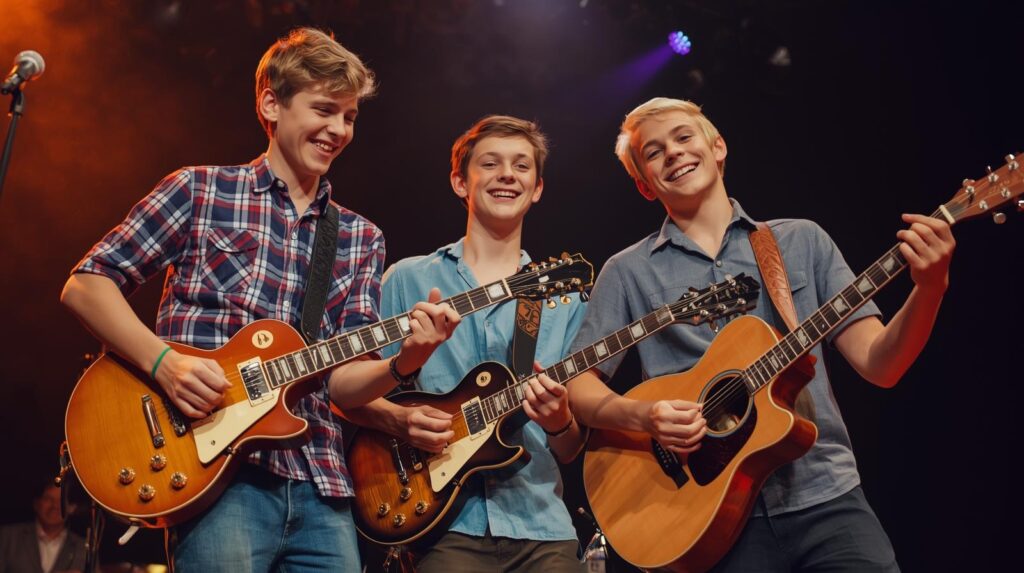
Jim was in a band with Dan (the one who went to Berklee). Now he has a great job and a young family. Still plays in a band.
Zach played in a band in high school. Now he’s in both a classic rock band and a modern country band. Different styles. Different musicians. But the same core activity.
Their friends who played sports together? They reminisce about the good old days. “Remember when we won States?” “Remember that championship game?”
But they’re not playing anymore. They’re just remembering.
Here’s the difference: Sports friends tell stories about what they used to do together. Music friends keep doing it.
The Expiration Date Nobody Mentions
Your child’s soccer teammates will drift apart after high school. Maybe they reconnect at reunions and talk about old games. But they’re not playing together anymore.
Because eventually, things hurt. Knees give out. Bodies age. The sport that brought them together becomes something they can’t physically do anymore.
The friends your child makes through music? They can keep making music together for the rest of their lives.
No torn ACLs. No age limit. No expiration date on the community they’re building.
Derek runs his own business with his wife now. He still plays when he has time. His former bandmates? They still get together and play. Not to remember what they used to do – to actually do it.
That’s a fundamentally different kind of friendship.
"But Sports Teach Teamwork"
I hear this constantly.
Parents tell me: “My kid needs sports for teamwork. Music is a solo activity.”
Let me show you something.
Think about basketball. Shooting baskets in your driveway is fun, sure. But those aren’t the skills you need to play on a team. You need to learn to pass, to set screens, to adjust your game based on what your teammates are doing.
Same thing with music. Music is a team sport.
Playing alone teaches you to execute your part – like shooting free throws. Important, yes. But only a small part of the game.
Playing with others teaches you to BE a musician – to listen, adjust, contribute, and create something bigger than what any one person could do alone.
My classes teach all the same teamwork skills sports do:
- Listening to others and adjusting your approach
- Being accountable to the group
- Contributing your part reliably so others can count on you
- Working toward a collective result
The difference? This team doesn’t have an expiration date.
The Team That Keeps Playing
Here’s what I see with students who come through my guitar classes:
They form bands in school. Play at churches. Find their musical community.
And that community doesn’t end when they graduate.
Jim has a demanding job and young kids at home. Still makes time to play with a band.
Zach didn’t stick with just one genre or one group. He plays classic rock with one band, modern country with another. The specific teams changed, but his ability to be part of a musical team never expired.
Every student who played in worship bands during school? Still contributing to worship teams at their churches.
Because they can. Bodies don’t age out of playing guitar. Life gets busy, sure. But the door stays open.
Sports teammates become people you follow on social media and see at reunions. Music teammates become people you still create with.
The team mentality doesn’t have to live in the past. It stays active.
They’re not looking back at what they used to do together – they’re still doing it. Different songs. Different venues. Different stages of life. But the same collaborative experience that bonded them in the first place.
Sports can’t offer that. Eventually, the body limits what’s possible.
Music? The only limit is interest.
What About All the Other Benefits of Sports?
I’m not saying sports are bad. If your child loves soccer or basketball and thrives in that environment, great.
But let’s be honest about what sports actually provide – and what they don’t.
Discipline and practice habits? My students develop these through systematic guitar training. Maybe more effectively, because there’s no off-season. No waiting for next year’s tryouts.
Physical activity? Important, yes. But guitar doesn’t replace exercise – it complements it. Your child can do both if time allows. Or they can get physical activity through hiking, biking, martial arts, dance – activities that also don’t age out.
Confidence through achievement? My students experience this every time they master a new song, perform in front of the group, or realize they can create their own parts. And that confidence compounds over years, not just one season.
Social connection? This is where music actually wins. Because the social connection built through making music together doesn’t depend on physical ability. It lasts as long as the friendship does.
The Schedule Reality
Let me address the elephant in the room: time.
Parents tell me “we’re too busy with sports to add guitar.”
I get it. Travel teams. Tournaments. Multiple practices per week. It’s a huge time commitment.
But here’s the question you should ask: What’s your child building with all that time?
Athletic skill that will peak in their teens or early twenties? Friendships that dissolve when the team ends? Memories of what they used to do?
Or a skill they can use for life? A community they can participate in at any age? The ability to create and collaborate that never expires?
I’m not saying quit sports for guitar. I’m saying: be strategic about where you’re investing your child’s developmental years.
Why My Approach Matters
Most guitar teachers offer private lessons. One-on-one instruction.
Here’s the truth: Private lessons are actually inferior for most students. Unless your child has a severe learning disorder that requires constant individual attention, they’ll learn better in a group environment.
Why? Because private lessons miss the teamwork and community benefits entirely. And they often enable bad habits – like the crying kid who manipulated his teacher, or students who dictate what they work on instead of following systematic progression.
My guitar classes deliver what private lessons can’t:
Individual skill development through my systematic layering approach – meeting each student at their level while keeping them engaged with real music
Team experience through playing with peers – learning to listen, adjust, and contribute to a collective sound
Accountability – you can’t manipulate, skip the hard parts, or coast when you’re part of a group working toward the same goals
Lifelong community through the bonds formed when kids make music together
The crying kid who manipulated his way through private lessons? Group environment taught him accountability in a month. You’re part of a team. Act like it.
The shy kids who barely made eye contact? They become confident enough to demonstrate techniques for others, help newer students, play in front of the group.
This is teamwork development. Just like sports. But with skills and friendships that don’t expire when bodies age out.
The Long View
When your child is 30, what do you want them to have from their childhood activities?
Photos of trophies? Stories about games they played?
Or the ability to pick up a guitar and play with friends? To create music with people they’ve known since middle school? To have a skill that brings joy and connection throughout their entire life?
I’ve watched this play out for three decades.
The students who learned guitar in my guitar classes didn’t just learn an instrument. They built a foundation for lifelong community.
Derek’s former bandmates still play together. Not every week – life gets busy. But enough to keep the connection alive.
Jim balances a career and young family, but he’s still in a band. Because he can be.
Zach moved between different bands and genres, but he never stopped playing with others.
Many people who played sports in school they’re Facebook friends with their old teammates. They like each other’s posts. Maybe they meet up at reunions.
But they’re not playing together anymore. That part of their life is over.
The music part? That’s still happening.
I’m not trying to convince you that music is “better” than sports in some abstract sense.
I’m showing you what actually happens over time.
Sports create intense bonds during a specific window of youth. Then they end.
Music creates bonds that can last as long as the friendship does.
Sports teach teamwork within a system that has an expiration date.
Music teaches teamwork within a system that grows with your child for life.
The question isn’t “should my child do sports or music?”
The question is: “What kind of community am I helping my child build? One that ends when bodies age out? Or one that can last as long as they want it to?”
Your child can have both if time allows. But if you’re choosing where to invest limited time and energy, understand what you’re actually building.
Memories? Or ongoing experiences?
Stories about the past? Or skills for the future?
A team that ends? Or a team that lasts?
About The Author
Brian Fish is a professional guitarist who has been dedicated to helping other guitar players in Northeast Ohio pursue their musical dreams since 1994. He’s passionate about guiding others on their musical journey! He is the Guitar Playing Transformation Specialist, instructor, mentor, trainer, and coach at
Guitar Lessons Geauga.
Brian has also assisted people from around the globe in developing a solid sense of timing and enhancing their creativity through the fantastic rhythm course, “Ultimate Rhythm Mastery,” available at MusicTheoryForGuitar.com.
If you live in Geauga County / North East Ohio, Guitar Lessons Geauga can help you become the player you’ve always wanted to be.