I’ve been teaching guitar since 1994. In that time, I’ve watched too many people walk into their first lesson excited to learn — and carrying a guitar that’s going to fight them every step of the way.
A $90 Amazon “deal” that won’t hold a tune for thirty seconds. A guitar with action so high it takes a death grip just to fret a clean note. A well-meaning Christmas gift that’s going to make a kid think guitar is painful and miserable. An adult who bought the cheapest thing online and now wonders why practicing feels like punishment.
Nobody wants to hear that the guitar they just bought is junk. And I don’t enjoy being the one to say it. But I’d rather tell you now — before you spend weeks blaming yourself — than let you struggle with an instrument that was never going to work.
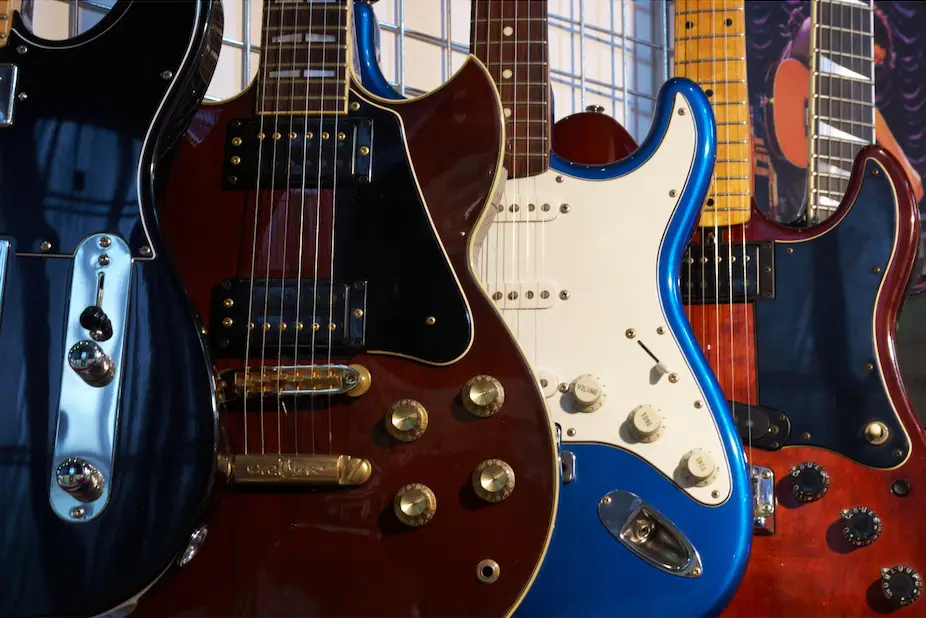
Sometimes when I break the news, the person is actually relieved. They thought they had no talent. They thought learning to play guitar was just that hard. Nope — it was the guitar. A real instrument feels completely different in your hands.
And then there’s grandpa’s old guitar from the attic. I get it — there’s sentimental value there. But a lot of those are old Sears catalog guitars that were one small step up from a toy when they were new, and they haven’t improved with age. Hang it on the wall. Buy a real instrument to learn on.
Here’s the truth: The guitar you buy matters. A lot. Not because you need to spend thousands of dollars. But because there’s a minimum threshold of quality below which you’re setting yourself up for frustration.
Let me show you how to avoid the most common mistakes.
The Biggest Mistake: Buying Based on Amazon Deals
The number one mistake I see is buying guitars based on Amazon “deals” or whatever’s cheapest online from non-music retailers.
Almost all of these guitars are toys, not instruments. They don’t stay in tune. The action is impossibly high. The intonation is off. Playing them is miserable.
Whether you’re buying for yourself or your child, you need a quality instrument that’s easy to play. Not a $150 piece of junk that makes learning harder than it needs to be.
Minimum budget for a beginner acoustic: $250-$400
Minimum budget for a beginner electric + amp: $400-$750
Yes, that’s more than the Amazon “deal.” But you’re buying something that will actually work, stay in tune, and not make you (or your child) hate practicing.
Electric vs. Acoustic: What Actually Matters for Beginners
Most beginners should start on electric guitar. This is pretty well established among experienced teachers, even though it surprises most people. They think acoustic is “more basic” or “the right way to start.”
Here’s why electric is actually easier:
- Thinner body — more comfortable to hold
- Lighter string gauge — requires less finger pressure
- Lower action typically — easier to press down strings cleanly
- Can practice unplugged — quieter than acoustic
Acoustic guitars have thicker strings, higher action, and require more hand strength. That’s fine for someone with developed hands. It’s frustrating for a beginner who’s still building calluses and finger strength.
Even if you specifically want to play folk, country, or singer-songwriter music, starting electric builds your skills and hand strength on the easier instrument. Most people end up with more than one guitar anyway — you can get the acoustic later once you’ve developed the fundamentals.
Starting electric doesn’t lock you into playing electric forever. It just makes the learning process less painful.
Classical Guitars: Unless You're Playing Classical Music, Don't
Classical guitars have nylon strings, wider necks, and a completely different feel.
Don’t buy one unless you specifically intend to play classical music.
Parents see them and think “this looks nice” without realizing they’re buying the wrong tool for what their kid wants to learn. Adults make the same mistake thinking nylon strings will be “easier.” They’re not easier — they’re different. And if you’re not playing classical repertoire, they’re the wrong different.
For Experienced Players: Stop Buying Cheap
Experienced players make a different mistake: buying multiple cheap guitars instead of investing in one quality instrument.
I see this constantly. Someone’s been playing a few years. They buy a $400 guitar. It’s not great. So they buy another $400 guitar thinking “maybe this brand will be better.”
Now they have two mediocre guitars and $800 spent.
Instead: Save up and buy the best instrument you can afford. One $1,500 guitar will serve you better than three $500 guitars.
Quality instruments hold their value. They play better. They sound better. They make you want to practice.
You may also want to consider adding specialized guitars to your collection for specific genres – a semi-hollow body for jazz, a 12-string acoustic for fuller soundscapes, different pickup configurations for different tones.
Don't Buy Based on Endorsements
Famous players get paid to endorse guitars. Often, they don’t even use the guitar in the ad when they perform live.
Even if they do use it, it might not feel right in your hands. A guitar is a personal thing — what works for someone with different-sized hands, a different playing style, and a different genre isn’t automatically going to work for you.
Try the guitar. If it happens to be a signature model and it feels great, fine. But don’t buy it just because your favorite player has their name on it.
New vs. Used
New guitars:
- Warranties from reputable manufacturers
- Can test them in the store
- Know exactly what you’re getting
- Opportunity to find one that feels right
Used guitars:
- Can offer significant savings
- Require careful inspection for damage or wear
- Often sold “as-is” with no recourse if there are problems
- Sales are typically cash-only transactions
If you’re buying used, have an experienced player or luthier check it out first. Look for damage, wear, playability issues.
Also know: Many sellers try to charge near-new prices for instruments with noticeable wear. Don’t overpay just because it’s “almost new.”
Popular Brands I Recommend
I get asked “what should I buy?” all the time. Here are the brands I consistently recommend.
Popular Electric Guitar Brands:
- Fender: Known for iconic Stratocaster and Telecaster models – versatile and widely loved for quality
- Gibson: Renowned for Les Paul and SG models – rich tones and premium craftsmanship but quite pricey
- PRS (Paul Reed Smith): Favorite for smooth playability and stunning aesthetics
- Ibanez: Favored by metal and rock players for fast necks and modern designs
- Epiphone: Offers affordable versions of Gibson models – perfect for beginners and intermediates
- Music Man — I personally love these guitars. I’ve never played a bad one. Also expensive, but worth it if it’s in your budget.
Brands with consistently positive reviews:
- Fender and PRS receive high praise for craftsmanship and playability
- Yamaha highly regarded for affordable beginner models
- Schecter and ESP/LTD are top picks for metal enthusiasts
Popular Acoustic Guitar Brands:
- Taylor: Known for bright, articulate tones and unmatched playability
- Martin: Famous for rich, full-bodied sound and long history in acoustic craftsmanship
- Yamaha: Offers excellent quality and value, especially for beginners
- Gibson: Produces high-end acoustics with warm, resonant tones
- Seagull: Known for affordability and exceptional sound quality
Brands with consistently positive reviews:
- Taylor and Martin dominate the high-end market with consistent praise
- Yamaha highly rated for beginner and intermediate models
- Seagull offers exceptional value for mid-range budgets
These brands consistently deliver quality. That doesn’t mean other brands are bad – but if you’re overwhelmed, you won’t go wrong here.
What Actually Affects How a Guitar Feels and Sounds
This is the section for people who want to understand what they’re looking at when they pick up a guitar. If you’re the type who wants to know why one guitar feels different from another, read on. If your eyes glaze over at specs, skip to “Where to Actually Buy” and just go try some guitars.
Body style affects sound, playability, and comfort. It also determines whether the guitar feels right against your body or like you’re wrestling with it.
Acoustic:
- Dreadnought — Large-bodied with bold, balanced tone. Ideal for strumming and flatpicking. Often don’t have cutaways, making access to higher frets more challenging.
- Concert and Grand Concert — Smaller body sizes that are more comfortable for smaller players. Emphasize clarity in fingerpicking. Often feature cutaways for easier access to higher frets.
- Jumbo — Oversized with booming, resonant sound. Perfect for big, open chords. May or may not include cutaways.
Electric:
- Solid Body — The most common type for rock and metal. Great sustain and minimal feedback. Many include ergonomic designs and cutaways for excellent fret access.
- Semi-Hollow and Hollow Body — Warm, rich tones popular in jazz and blues. Some models have cutaways to make higher frets more accessible.
Consider your playing style, physical comfort, and the sound you’re after when choosing body style. If you’re not sure, go to a store and hold a few different shapes. You’ll know pretty quickly which ones feel right.
Pickups (Electric Guitars)
The type of pickup is the single biggest factor in how an electric guitar sounds:
- Single Coil — Bright, crisp sound. Commonly used in rock, blues, and pop. Think Stratocaster.
- Humbucker (Double Coil) — Warmer, fuller tone that reduces unwanted noise. Popular in rock, jazz, and metal. Think Les Paul.
- Active Pickups — Battery-powered, high-output signal. Favored by metal players for clarity and punch.
Each pickup type caters to different musical styles. If you know what kind of music you want to play, the pickup choice often narrows itself down.
Neck Shape
Neck shape is one of the biggest factors in how comfortable a guitar feels. This is why you need to try before you buy — no amount of reading about neck shapes replaces holding one.
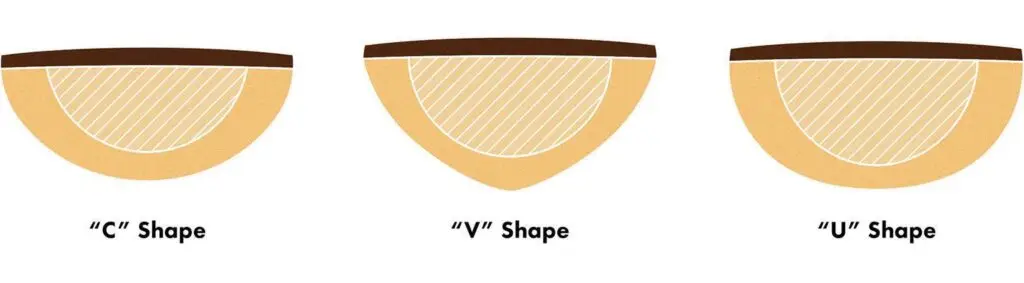
- C-Shape — Rounded, versatile shape that works for most players. The most common and usually the safest bet.
- V-Shape — Prominent ridge with a vintage feel. Great thumb placement for some players.
- U-Shape — Chunkier neck. Ideal for players with larger hands or those who prefer a solid grip.
Also consider neck attachment: bolt-on necks are common in electric guitars and allow for customization and easy repairs. Set-neck and neck-through designs offer smoother transitions, making it easier to access higher frets.
Number of Frets
Guitars typically have 21, 22, or 24 frets. If you enjoy solos or play in higher registers, you may prefer more frets to access extended ranges. For most beginners, this isn’t something to worry about.
Type of Bridge
- Fixed Bridge — Simple and reliable. Excellent tuning stability and sustain. This is what I’d recommend for most beginners.
- Tremolo Bridge (Floating Bridge) — Allows pitch modulation but may require frequent tuning adjustments. More maintenance.
- Locking Tremolo — Common in metal and shred guitars. Extreme pitch bending while maintaining tuning stability. But if a string breaks, you’re done for the night.
Tuners
Tuner quality can impact tuning stability, but replacing tuners is relatively inexpensive and easy. If the guitar meets all your other criteria but has lower-quality tuners, that shouldn’t be a dealbreaker. I put Grover tuners on all my guitars. They’re reliable, affordable, and a noticeable upgrade over stock tuners on most mid-range instruments.
You Need a Case
Protect your investment. Get a case.
- Soft Cases (Gig Bags) — Lightweight and affordable. Great for casual use and basic protection against scratches and minor bumps.
- Hard Cases — Excellent protection against drops and impacts. Ideal for transporting your guitar to gigs or lessons.
- Flight Cases — Designed for air travel. Maximum protection with reinforced materials. Heavier and more expensive but essential for frequent travelers.
A good case preserves your guitar’s condition and resale value. Don’t spend $500 on a guitar and then lean it against the wall.
Where to Actually Buy
Local mom and pop music stores:
- Try before buying
- Can get expert advice
- Build a relationship with the shop
- Support local business
- Note: It costs a lot to stock top name brands — most small shops don’t carry them anymore. You may have to travel to find one with a good selection.
Chain stores (like Guitar Center):
- Large selection to try
- Wide range of top brands in stock
- Employees are hourly and not always the most knowledgeable
- Best to know what you’re looking for before you go
- Can be hit or miss on customer service
Online (I recommend Sweetwater.com):
- Very good customer service
- More selection
- Sometimes better prices
- Can’t try it first, but good return policies
Used — Local:
Fret Less Guitar in Montville — Bill Rymer is knowledgeable and carries used guitars.
Geauga Pawn in Newbury — can find deals, but these are as-is purchases. Bring someone who plays if you don’t. Inspect carefully before buying
Used — Online marketplaces:
- Can find deals
- Buyer beware — inspect thoroughly
- Often cash-only transactions
The reality: Chain stores have the inventory but inconsistent expertise. Small shops have the expertise but often limited inventory. Online has everything but you can’t try it first.
I recommend: If you can find a good local shop with decent selection, start there. Otherwise, know what you want and try it at a chain store, or order from sweetwater.com with their return policy as backup.
For repairs and setups, I trust Mike at Auburn Guitar in Newbury. He knows his stuff — so much so that the Rock and Roll Hall of Fame hired him to maintain their famous instrument collection.
What I Tell Every Student
A great guitar is one that makes you want to play it. It should look good, sound good, and feel good in your hands. It should make you want to pick it up.
Don’t buy based on price alone. Don’t buy just because it looks cool. Don’t buy the cheapest thing you can find online.
Buy the best instrument you can afford that feels right when you play it.
If you’re a beginner (or buying for one): Get a quality starter guitar in the $250–$750 range. Not an Amazon “deal.” An actual instrument from a reputable music company.
If you’re experienced: Stop buying multiple cheap guitars. Save up and buy one quality instrument.
Your guitar is your primary tool. Invest appropriately.
The difference between a quality instrument and cheap online junk isn’t subtle. It’s the difference between someone who thinks they have no talent and someone who realizes the guitar was the problem all along.
Take your time. Try different guitars. Find one that inspires you. That’s the guitar worth buying.
About The Author
Brian Fish is a professional guitarist who has been dedicated to helping other guitar players in Northeast Ohio pursue their musical dreams since 1994. He’s passionate about guiding others on their musical journey! He is the Guitar Playing Transformation Specialist, instructor, mentor, trainer, and coach at Guitar Lessons Geauga.
Brian has also assisted people from around the globe in developing a solid sense of timing and enhancing their creativity through the fantastic rhythm course, “Ultimate Rhythm Mastery,” available at MusicTheoryForGuitar.com.
If you live in Geauga County or Northeast Ohio and are still unsure and need advice on buying your new guitar or are seeking guitar lessons, click the link below to contact me, and I will do my best to assist you.