If you’re a parent thinking about guitar lessons for your child, you’ve probably asked the big question: What’s the right age to start?
Some programs advertise guitar lessons for kids as young as four. Others say to wait until high school. So—who’s right?
The truth is, it depends on what you want your child to get out of music. But if the goal is steady, frustration-free progress on guitar specifically, the sweet spot is usually age 10 and older.
Here’s why.
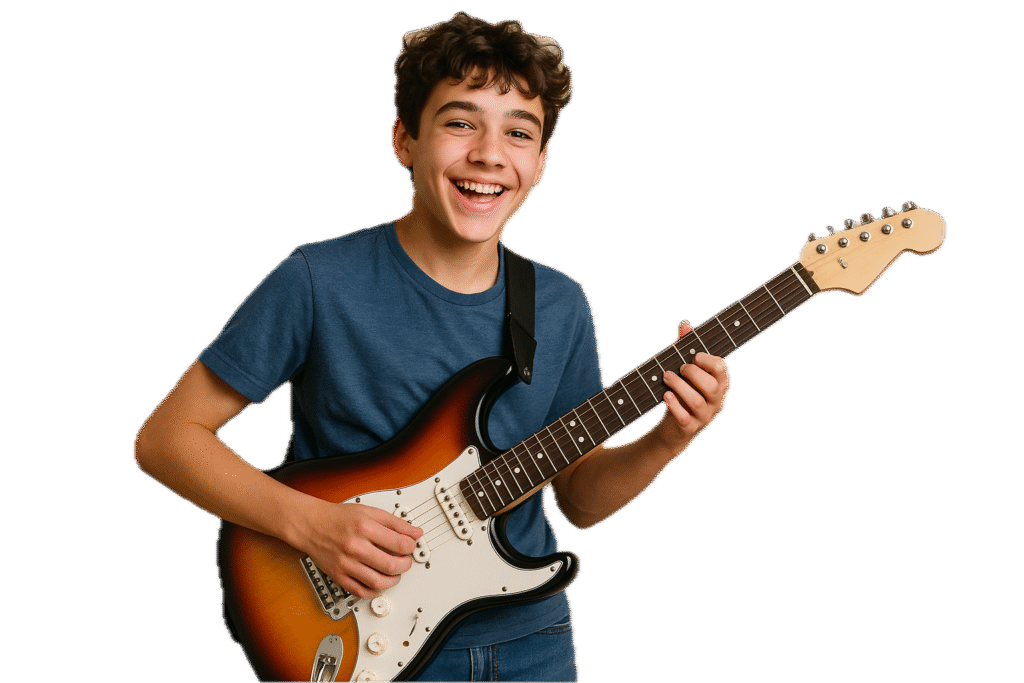
The Physical Demands of Guitar
Unlike piano or singing, guitar has some real physical barriers. A student has to:
- Press steel or nylon strings hard enough to get a clear tone.
- Stretch their fingers across frets that can feel wide on little hands.
- Coordinate both hands in ways that require dexterity and strength.
Research shows hand strength and finger control climb steadily through late childhood. By the time kids hit around 10, they usually have the grip strength, arm length, and coordination to handle guitar without the constant frustration of sore fingers or unreachable chords.
That’s one reason kids who begin at this age often stick with it—they simply have the tools to succeed.
The Focus Factor
Another piece of the puzzle: attention span.
At age 6 or 7, many kids are still developing the ability to sit, focus, and follow step-by-step practice routines. Sure, some can do it. But for most, consistent practice feels like a battle between parent and child.
By age 10 and up, the brain has matured enough that kids can concentrate longer, remember what they worked on last time, and—most importantly—practice on their own without constant reminders.
But Isn’t Earlier Always Better?
This is where the conversation gets tricky.
Yes, research does show that early music training (before age 7–9) can shape rhythm, coordination, and even how the brain processes sound. That’s why you’ll see violin or piano programs starting very young.
But here’s the catch: those early advantages don’t translate to the guitar.
If your child is under 10 and you want to nurture their musical side, the best bet isn’t to force them onto a steel-string. Instead, focus on foundational skills that transfer beautifully to guitar later:
- Drumming or percussion: Builds rhythm, coordination, and timing—the backbone of music.
- Singing simple pitches: Develops ear training, pitch recognition, and confidence.
- Clapping games or body rhythm: Teaches steady beat and listening skills in a fun, low-pressure way.
These activities spark the same brain benefits without the frustration of fighting strings. When your child is ready for guitar, they’ll progress faster because the groundwork is already there.
Why 10+ Is the Sweet Spot
When you put the pieces together, a pattern emerges.
- Hands are stronger and bigger.
- Attention span is longer.
- Practice habits can actually stick.
In other words: guitar becomes fun instead of frustrating. Kids at this age can learn a song in weeks, not months. They start sounding good sooner. And once they experience that progress, motivation snowballs.
That’s why 10 and older is widely considered the best time to start guitar. It’s the perfect blend of physical ability, mental focus, and excitement.
What About Teens?
If your child is already a teenager, you might worry it’s too late. Good news: it’s not even close.
Studies from Northwestern University and others show that adolescents who start music in high school still see measurable changes in how their brain processes sound. Music strengthens listening, attention, and even academic skills—no matter when you start.
And in many ways, teens often progress quickly because they can focus, follow instructions, and practice deliberately.
Is My Child Ready for Guitar?
Use this quick checklist to find out:
[ ] Hand size: Can they comfortably get their hand around the neck and reach all the strings?
[ ] Finger strength: Can they press down strings without constant buzzing or pain?
[ ] Focus: Can they stay engaged for 15–20 minutes at a time?
[ ] Excitement: Are they showing interest and asking to play—not just doing it because you think it would be good for them?
If you can check most of these boxes and your child is 10 or older, it’s the perfect time to start guitar lessons.
Final Takeaway for Parents
Here’s the bottom line:
- Under 10? Don’t rush. Encourage rhythm, singing, and musical play instead. Those skills matter more than tackling guitar early.
- 10 and older? This is the ideal window. Progress comes quicker, practice is smoother, and confidence grows faster.
- Teenagers? Still a great time—many of today’s best players first picked up guitar in their teens.
If you want your child to love music—not just tolerate it—timing matters. Start too early, and the guitar can feel like a constant battle. Start at the right age, and it becomes a lifelong source of joy.
About The Author
Brian Fish is a professional guitarist who has been dedicated to helping other guitar players in Northeast Ohio pursue their musical dreams since 1994. He’s passionate about guiding others on their musical journey! He is the Guitar Playing Transformation Specialist, instructor, mentor, trainer, and coach at
Guitar Lessons Geauga.
Brian has also assisted people from around the globe in developing a solid sense of timing and enhancing their creativity through the fantastic rhythm course, “Ultimate Rhythm Mastery,” available at MusicTheoryForGuitar.com.
If you live in Geauga County / North East Ohio, Guitar Lessons Geauga can help you become the player you’ve always wanted to be.